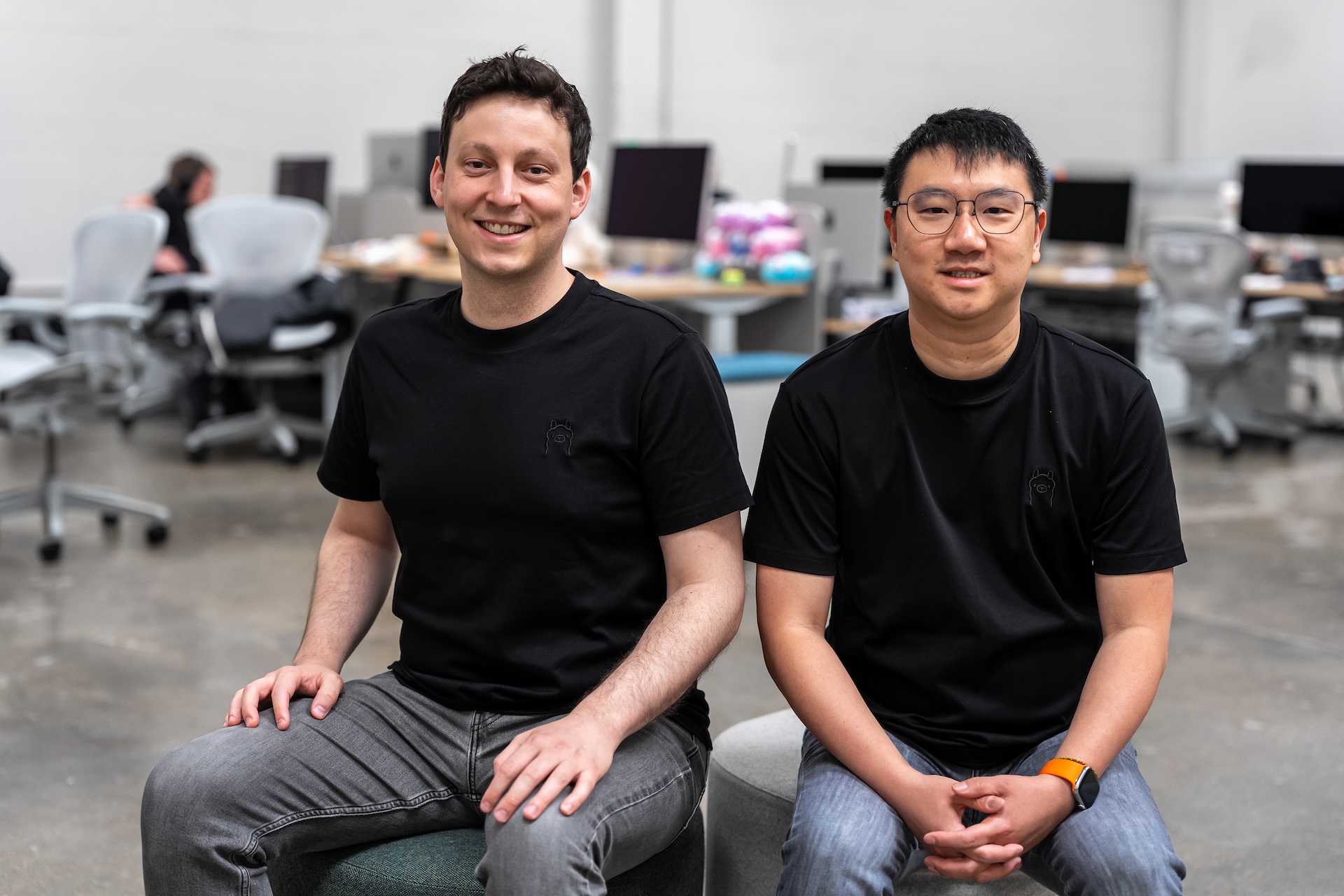
Ollama has raised $88 million to make open AI models as easy to run as an app, the company announced on its blog on July 9. The round is led by Peter Fenton of Benchmark, with Tomasz Tunguz of Theory Ventures and Alex Kolicich of 8VC, plus Y Combinator and a bench of operator angels including Docker founder Solomon Hykes and ClickHouse chief executive Aaron Katz.
The numbers in the post are the story. Ollama now serves 8.9 million developers, and the founders say the tool is "used by 85% of the Fortune 500." For a free, open source utility that started as a simple way to run Llama on a laptop, that is remarkable penetration into exactly the companies that pay for software.
What Ollama actually does is remove the friction between a developer and an open model. One command downloads and runs models like Llama, Gemma, Qwen or Falcon on local hardware, with "no permission, API key, or expensive server hardware required," as the announcement puts it. The founders, who previously built Docker Desktop, frame the pitch in three words: "Your model. Your machine. Your data." The new capital goes to three things: seamless hybrid inference that splits work between local machines and Ollama's cloud, same-day support for newly released open models, and expansion of that cloud platform.
Why it matters: this is Benchmark, one of the most disciplined firms in venture, underwriting the thesis that open models are now production infrastructure, not a hobbyist scene. As the post says, "Open models aren't an experiment or a research project anymore." The raise also signals where the money in open AI actually sits: not in training models, which is a capital furnace, but in owning the distribution layer through which every open model reaches developers. Ollama occupies the same strategic position for open weights that Docker Hub held for containers, and the same monetization question comes with it.
The Gulf link is direct. Regional institutions with strict data residency requirements, from banks to government entities, are precisely the buyers for whom local inference beats a US-hosted API. The UAE's Falcon models from TII already distribute through Ollama's library, meaning the region's flagship open models ride this pipeline to a global developer base. A hardened, well-funded Ollama makes sovereign AI deployments cheaper to stand up.
The takeaway. Builders get a safer bet: the de facto local runtime now has real capital behind it, so standardizing internal tooling on Ollama carries less abandonment risk. Enterprises running proof of concepts on it should watch the cloud and hybrid roadmap, because that is where a commercial tier and pricing will appear. Closed-model API vendors should worry at the margin: every workload that fits in an open model on owned hardware is per-token revenue that never materializes. Investors should read the round as a marker that the open model stack, from weights to runtime to orchestration, is now fundable at scale.